The Imagine School Program in Madagascar
Contributing to a better society: an ideal shared by young people around the world
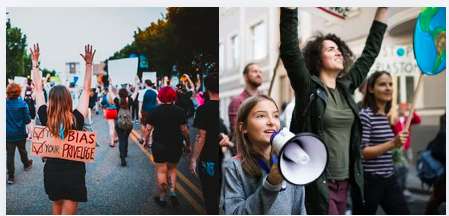
Nevertheless, across the world, we are seeing protest movements emerging from the younger generations… What is striking is the universal nature of their demands: a better standard of living, greater freedom, justice, democracy, respect for the environment, and, above all, an end to corruption, privilege and nepotism, as demonstrated by the recent student uprisings in Nepal, Iran, Sri Lanka, Serbia, Morocco, Peru, the Philippines, Madagascar – with mixed results we are all familiar with. If these young people are rebelling in this way, sometimes to the point of deadly confrontation, it is not because they have lost all hope; on the contrary, they harbour the hope that things will change. Yet they are confronted with a profound sense of powerlessness.
Offering children – regardless of their means, living conditions, language or religion – the chance to experience their power to make a difference in their own environment, on their own scale, enables them to build self-confidence and realise how much they can contribute to solutions. It gives them the keys to a world that seems to be slipping away from them. Whether implemented in a nursery school in La Réunion, a secondary school in Reims, a private school in Montlhéry, the French Lycée in Rabat or a slum in Dhaka, our educational programs pursue this objective, and they work!
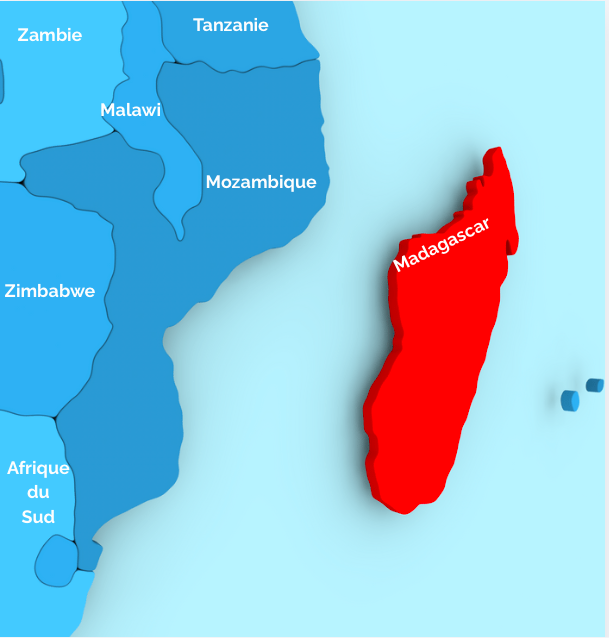
e have been operating in Madagascar since the beginning of the 2025 school year. Ranked among the 10 poorest countries in the world, the Red Island faces considerable challenges. Around 75% of its 30 million inhabitants live on less than $3 a day and, according to a recent study by economist Maeva Robars, 40 to 45% of children suffer from hunger, with serious consequences for their development.
Access to education remains difficult, and the literacy rate is improving too slowly. *Source
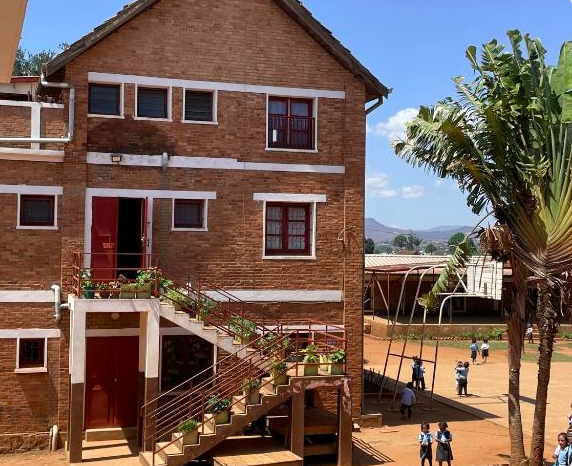
Located in the Antsongo district, it caters for children who are isolated and from disadvantaged backgrounds and who do not have access to state schools, from nursery to high school. Today, some 1,200 pupils are supported both intellectually and physically, thanks to the team led by Sister Viviane and the support of organisations such as our friends at Enfance & Vie, with whom we have a longstanding relationship.

This connection is no coincidence: the organisation was founded by Frédérique Bedos’s adoptive father in 1979 to improve the living conditions of children in underprivileged countries!
The founder of our NGO has naturally become the patron of this charity, which:
In France, works in partnership with the Institut Cœur Poumon in Lille to coordinate and fund hospital treatment for children suffering from heart conditions that cannot be treated in their own countries.
Abroad, supports schools and orphanages, primarily through the sending of supplies, sponsorship schemes and construction projects.
Thanks to this remarkable network of goodwill, our Imagine Programs are now making a real difference for the pupils at this secondary school. We are delighted to share their feedback with you below !
How civic engagement is transforming schools
by Agnès D. Volunteer with ‘Enfance et Vie’,
coordinator of the PEI project in Madagascar
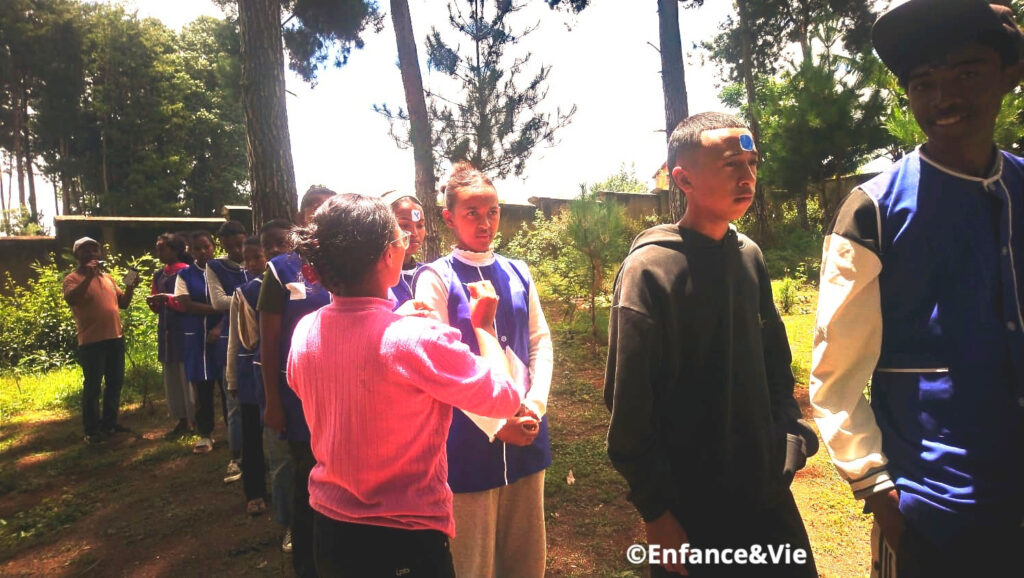
From France to Madagascar, the Imagine School Program (PEI) is redefining the role of teachers and pupils. This empathy-based teaching approach is breaking new ground at Picot Clorivière High School in Antsirabe.
A project brought to life: the example of Antsirabe
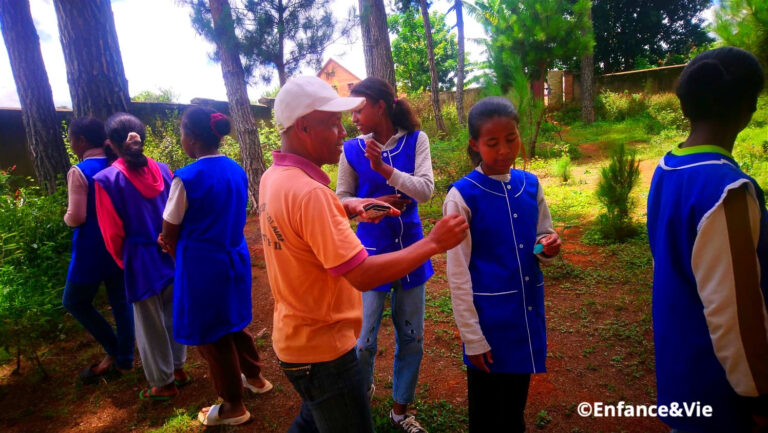
The implementation of the PEI at Picot Clorivière secondary school in Antsirabe, led by Ferlin, Alain and Tina, illustrates the transformative power of this method. By fully embracing the project, they have succeeded in mobilising 70 secondary school pupils, all of them deeply committed. This local success shows that questions of solidarity and identity are universal and resonate strongly with teenagers – particularly within the specific geographical, economic, and social context of Madagascar.
For teachers: a shift in professional practices
The implementation of the PEI not only transforms pupils, it also acts as a catalyst for educators.
For teachers such as Ferlin, Alain and Tina, this project enables them to:
● Shift their teaching approaches: Moving beyond a strictly academic framework to become project facilitators.
● Renew their professional practices: The PEI offers tools drawn from community education that promote active listening and co-creation rather than top-down transmission. This strengthens the educational relationship over the long term and reshapes how young people’s potential is perceived.
For pupils: developing collective intelligence
The core of the program is based on the development of social and emotional skills (SES).
By drawing on collective intelligence, the PEI enables the 70 secondary school pupils in Antsirabe to cultivate:
● Constructive empathy: Through workshops such as ‘Willie’ (on the impact of words) or the ‘Héros Imagine’ activity, pupils go beyond ‘understanding’ others- they learn to take action on their behalf.
● Collaborative solidarity: Through the four sessions of the “Action” phase, they move from being spectators to becoming designers of local projects, learning to negotiate, decide and act together.
By fostering this ‘collaborative empathy’, the teaching staff at Lycée Picot de Clorivière are preparing a generation of citizens who are not only aware of global challenges, but, above all, confident in their ability to transform their everyday environment. This is a powerful source of hope for the future – an inspiring example for the entire educational community.
Want to join the movement?
☞ To make a donation
>> click on the link below:
Make a donation
Or send a cheque
made out to
“Les Amis du Projet Imagine”
Le Projet Imagine – 4 rue Saint-Saëns – 75015 Paris – France
Your generosity is key to support our mission.
Founded in 2010 by journalist Frédérique Bedos, the NGO of information « Le Projet Imagine » aims to create a movement of citizen commitment with a view to a more inclusive and sustainable society.
Convinced that everyone can activate their power to make the world a better place, it raises public awareness through inspiring films and involves the public in action-oriented programs that are in line with the Sustainable Development Goals as defined by the United Nations.These programs are deployed in schools and increasingly in companies, cities and prisons.
Since 2017 « Le Projet Imagine » is officially recognized by the United Nations.